Loading...
Serving Elk Grove, CA and surrounding areas. (279) 249-0140
Elk Grove slopes wash downhill a little more every rainy season. A properly built retaining wall holds the soil back, gives you usable yard space, and can last 40 to 50 years when drainage is done right.
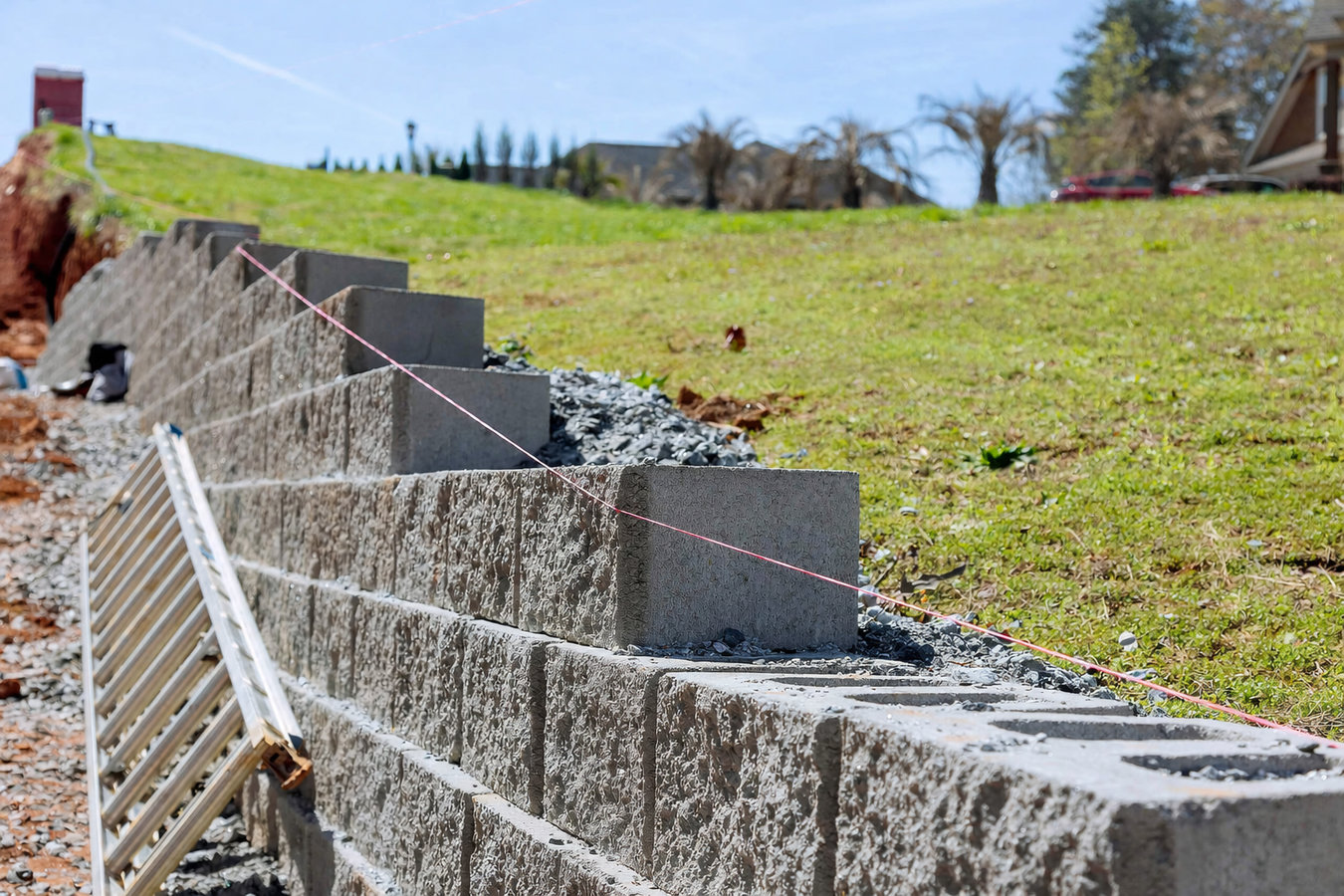
Retaining wall construction in Elk Grove holds back soil on a slope or hillside, most residential projects take two days to two weeks depending on wall height and material, and a properly built wall requires compacted gravel backfill and drainage pipe behind it so water never builds up and pushes the wall out.
If you have a sloped section of yard that washes downhill every winter, or an existing wall that has started to lean or crack, the problem does not fix itself. Elk Grove clay soil absorbs winter rain heavily and then shrinks and pulls back in summer - that repeated movement is exactly what causes walls to fail over time when drainage is not built correctly from the start.
Homeowners who are adding a patio or restoring exterior masonry near a slope often discover mid-project that a retaining wall needs to come first - it is much easier to plan for that upfront than to deal with shifting soil once other work is underway.
If you notice dirt, mulch, or gravel migrating downhill after Elk Grove winters, ending up on your patio or driveway, your slope is eroding faster than any planting can hold it. Left alone, that erosion works its way under hardscaping and landscaping and eventually toward any structures nearby.
If part of your yard is too steep to mow safely or too unstable to plant, a retaining wall can turn that slope into flat, usable terraces. Many Elk Grove homeowners with graded lots find that a well-placed wall opens up space for a garden, patio, or play area that was not practical before.
If an older wall is starting to tilt forward, showing horizontal cracks, or pulling away from the soil behind it, those are signs the wall is under stress it was not designed for - or that drainage has failed. In Elk Grove clay soil this kind of movement accelerates once it starts, so it is worth calling a contractor before the next rainy season.
When water collects at the bottom of a sloped area rather than draining away, it means the slope is shedding water faster than the ground can absorb it. Over time that pooling damages lawn, creates areas that never fully dry out, and puts steady pressure on any structures nearby.
We build retaining walls in concrete block, natural stone, and poured concrete depending on the height, load, and appearance the project requires. Every wall includes gravel backfill and perforated drain pipe behind it - that drainage system is never visible once the job is done, but it is what separates a wall that lasts from one that fails within a few seasons. For walls over four feet tall, we handle the permit application with the City of Elk Grove Building Division and coordinate the required inspection. For HOA communities in Laguna, Stonelake, and similar neighborhoods, we provide the drawings your association needs for design review so you are not left figuring that out on your own.
When a slope needs to be stabilized before other work can go forward, we tie retaining wall construction into larger projects that include concrete block walls for property boundaries or privacy, or masonry restoration for existing structures nearby. Each project gets an itemized written scope before work starts so you know exactly what is included.
Best for homeowners with an eroding slope, wasted yard space, or a new construction project that needs soil stabilized before building.
Right for walls that are leaning, cracking, or have drainage failure behind them - where a targeted repair or full rebuild is the safer long-term choice.
Suits yards with significant grade change where multiple shorter terraced walls create usable flat areas for planting, seating, or hardscaping.
Elk Grove was built quickly. Large portions of the city were mass-graded during development in the 1990s and 2000s, which means soil was moved and compacted by machines rather than settled naturally over time. Those graded lots can have unpredictable soil conditions that affect how a retaining wall needs to be anchored. A contractor who has worked extensively in Elk Grove neighborhoods knows to check for this and adjust the foundation design accordingly. Add in the region's clay soils - which swell through wet winters and shrink through dry summers - and you have a combination that is hard on any wall built without proper drainage. Homeowners in Roseville face the same clay soil conditions and seasonal stress on their retaining walls.
The City of Elk Grove requires permits and often engineering review for walls over four feet tall, and a significant share of Elk Grove neighborhoods have HOAs that require design approval before structural yard work begins. That combination of regulatory steps adds a few weeks to the timeline but also protects you - a city inspector will verify the work, and HOA approval means your wall cannot later be cited as a violation. Homeowners in Sacramento deal with similar permit and clay soil requirements, and we have completed projects across the region.
Call or submit the contact form and we respond within one business day. We ask a few questions about the slope, the material you are considering, and whether an existing wall is involved, then schedule a free site visit.
We measure the slope, check soil conditions and drainage, and walk you through what the project involves - including whether permits or HOA approval are needed. You receive a written, itemized estimate covering materials, labor, drainage, permit fees, and cleanup.
For walls over four feet tall, we submit permit drawings to the City of Elk Grove on your behalf. If you are in an HOA community, we provide the documentation your association needs for design review. Plan for two to four weeks for permit review; HOA timelines vary.
The crew excavates the foundation, builds the wall with gravel backfill and drainage pipe, and restores the surrounding area when finished. If a permit was required, we coordinate the city inspection. We walk the completed wall with you before calling the job done.
Free site visit, written estimate, no work starts until you approve the scope.
Every wall we build includes compacted gravel backfill and perforated drain pipe behind it. That drainage system is what keeps water pressure from building up and pushing the wall out over time. In Elk Grove clay soil, skipping proper drainage is the single most common reason retaining walls fail within a few years of installation.
Elk Grove clay expands and contracts significantly each year, and walls built with footings that are too shallow shift and lean as a result. We size foundation depth to what this specific soil type requires so your wall stays plumb through the wet-dry cycles that are a constant feature of Sacramento Valley climate. NCMA design standards guide how we specify block systems and structural elements.
For taller walls requiring City of Elk Grove permits, we prepare and submit the drawings, track the review timeline, and coordinate the inspector's visit after construction. You do not have to navigate city offices on your own, and the permit on record protects you as the property owner if questions arise later.
If you are in a Laguna, Stonelake, or Poppy Ridge community, your HOA needs design drawings before structural work can begin. We provide the documentation your association requires, start the approval process early, and do not break ground until everything is signed off - so your new wall is an asset and not a violation notice. UC Cooperative Extension resources on soil and slope management inform how we approach drainage design in this region.
Drainage, foundation depth, permit compliance, and HOA documentation - those four things are what separate a wall that holds for decades from one that becomes a problem within a few seasons. We build every project with all four in mind from the first site visit forward.
When existing masonry structures near your slope need repair alongside the new wall, we handle both in one coordinated project.
Learn MoreFor property boundaries or privacy walls that complement your retaining wall, concrete block offers durable construction at a practical price point.
Learn MoreContact us today for a free site visit and written estimate. Every wet season you wait, your slope loses a little more ground.